2025.03.18

Seeking a Team Leader (RIKEN BDR)

1. Detailed information:
https://www.riken.jp/en/careers/researchers/20250117_1/index.html

2. Job title:
Team Leader (Principal Investigator, indefinite-term): 1 position

3. Research Field and Overview:
RIKEN's research is based on comprehensiveness and interdisciplinarity, and with free thinking as its basic philosophy, RIKEN promotes research that goes beyond the boundaries of conventional research fields, while at the same time responding to the needs of society from a strategic perspective.

RIKEN invites applications for the position of Team Leader (Principal Investigator) to serve in a leadership position in the following research area. The successful candidate will be responsible for directing research projects from a medium-to-long-term perspective.

Specific Research Field: Organoid life science
Organoid life science offers tremendous potential for applications, ranging from contributions to fundamental sciences such as developmental biology, to practical implementations in regenerative medicine. This recruitment invites applications from researchers across a broad spectrum of the organoid and stem cell fields. We are seeking candidates capable of leading these fields and serving as central contributors to the center's research over the medium to long term.

Examples of relevant research include:

Utilizing organoid technology to recapitulate organogenesis in vitro, greatly enhancing opportunities for observation and manipulation, and establishing powerful tools for basic scientific research.

Investigating the diversity and commonalities of life through comparative approaches across various animal species, with the ultimate goal of advancing our understanding of humans.

Conducting studies from a life-cycle perspective, encompassing the continuum from birth to death and to the next generation, and contributing to the ability to manipulate these processes.

Reproducing developmental processes, pre-disease states, and disease states in vitro, contributing to advancements in reproductive and regenerative medicine from a societal perspective, thereby addressing social issues such as declining birth rates and promoting medical innovation.

Advancing stem cell research that supports organoid studies.

Engaging in research that leads the field internationally and contributes to the advancement of humanity, regardless of the examples above.

4. Qualification:
Applicants must be conducting outstanding research in organoid/stem cell research fields and have the ability to lead the above research field internationally. We welcome applicants of all nationalities.

5. Work location:
RIKEN Kobe (2-2-3 Minatojima-minamimachi, Chuo-ku, Kobe, Hyogo 650-0047, Japan)

6. Application and Required documents:
For details, please visit our website mentioned above.

7. Deadline:
The application must arrive no later than noon, May 2, 2025 (Japan Standard Time).

8. Start of Employment:
RIKEN expects that the successful candidate will be able to take up this position at the earliest opportunity on or after January 1, 2026.
2025.03.04

Call for applications for the position of Special Postdoctoral Researcher (SPDR)

RIKEN is currently accepting applications for the FY 2026 Special Postdoctoral Researcher (SPDR) Program, from young, creative, independent researchers who will be a powerful force in furthering RIKEN’s research activities.

Number of openings: Around 70

Research fields:
Mathematical Sciences (pure mathematics, applied mathematics, computer science, information science, artificial intelligence, etc.), Physics I (particle, nuclear, astrophysics, etc.), Physics II (condensed matter, etc.), Chemistry, Biology (cell biology, developmental biology, plant biology, structural biology, microbiology, imaging, measuring, basic neuroscience, etc.), Medical Science (brain medical science, immunology, oncology, genome science, etc.) and Engineering that relate to research being conducted at RIKEN.

Qualifications:
Capable of independent and responsible pursuit of a research topic. See SPDR website for details.

Salary and benefits:
 Annual salary paid in monthly installments of 550,000 yen (gross amount). / Commuting allowance (actual cost up to maximum of 55,000 yen per month)
 Housing allowance (partial payment of rent)
 Research budget: 1,000,000 yen per year. In addition, upon review, a maximum of 1,000,000 yen in total can be provided up to two times during the three-year SPDR term.
The amount for the first fiscal year and the last fiscal year is allotted on a pro-rata basis depending on the month in which the SPDR starts working at RIKEN.
 Fixed-term contract employee (3 years)

Applications will be accepted from February 3 to April 10, 2025.

Inquiry:
SPDR Desk, Research Personnel Affairs Section, RIKEN
2-1 Hirosawa, Wako, Saitama 351-0198 Japan
Email: wakate@riken.jp
http://www.riken.jp/en/careers/programs/spdr/career2026/

Note: The provisions for this position are premised on RIKEN’s current budget and are subject to change with any change in the budget. Please check the website for details.
2025.01.28

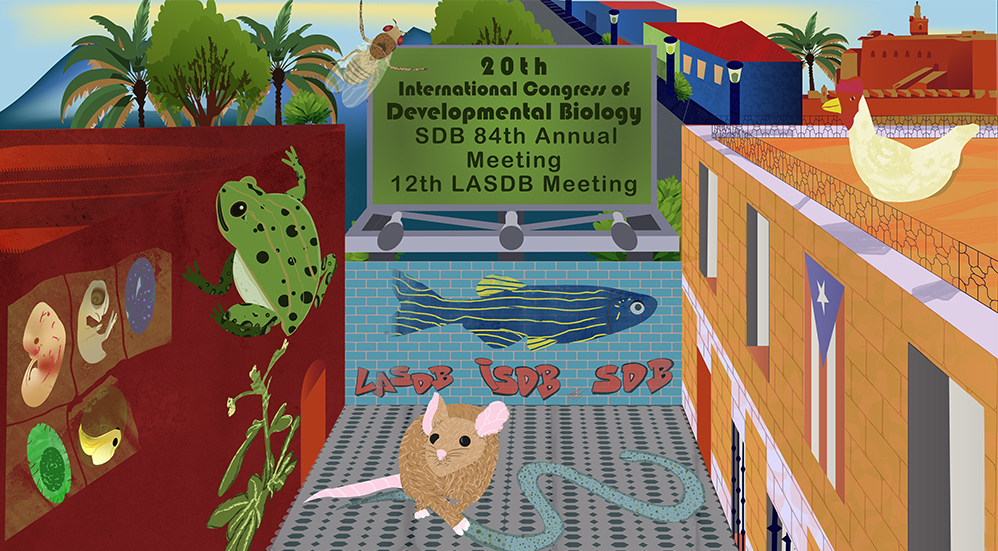
20th International Congress of Developmental Biology

20th ICDB
SDB 84th Annual Meeting
12th LASDB Meeting
https://www.sdbonline.org/2025icdb

Program Co-Chairs
Marianne Bronner, International Society of Developmental Biology
Carole LaBonne, Society for Developmental Biology
Juan Riesgo, Latin American Society for Developmental Biology

Upcoming Deadlines
Abstract Deadline: March 12, 2025
Registration Deadline: April 16, 2025
Housing Deadline: May 25, 2025
2025.01.24

International PLANT EVO DEVO symposium in Berlin (Germany)

This PLANT EVO DEVO symposium will take place near the botanical garden of Berlin (Germany) between March 25th and 28th, 2025.
Future participants can register using our DFG-ICIPS homepage: https://dfg-icips.org/berlin2025/
or directly using: https://conferencecentral.org/32
The purpose of this 3-day international ICIPS symposium is to bring together researchers from around the world interested in exploring the evolution and development of land plant sexual reproduction.

The symposium will be divided in eight successive sessions focusing on the evolution of pollen and their reception/rejection systems, of multicellular embryos and endosperm, of carpels and fruits, of ovules and seeds, of fertilization mechanisms in plants, of (ROS) signalling systems and gene regulatory networks in plant development and reproduction as well as finding bioinformatics solutions to harness EvoDevo challenges.

ICIPS is a research unit funded by the German Research Foundation (DFG Deutsche Forschungsgemeinschaft) studying the „Innovation and Coevolution In early-land Plant Sexual reproduction“. This academic organization is composed by seven research groups from five different German universities (JLU Gießen, UR Regensburg, RPTU Kaiserslautern-Landau, FSU Jena, OU Osnabrück) including six DFG-funded research projects conducted by six Ph.D. students and two postdoctoral researchers.
International invited Speakers:
• Madelaine Bartlett (University of Cambridge – UK)
• James Clark (University of Bath – UK)
• Lucia Colombo (University of Milano – Italy)
• Noni Franklin-Tong (University of Birmingham – UK)
• William Friedman (Harvard University – USA)
• Tetsuya Higashiyama (Nagoya University & University of Tokyo – Japan)
• Gwyneth Ingram (French National Centre for Scientific Research CNRS – France)
• Kerstin Kaufmann (Humboldt University of Berlin – Germany)
• Claudia Köhler (Max Planck Institute in Potsdam – Germany)
• Isabel Monte (Eberhard Karl University of Tübingen – Germany)
• Andrew Plackett (University of Birmingham – UK)
• Hughes Renault (University of Strasbourg – France)
• Uwe Scholz (Leibniz Institute of Plant Genetics and Crop Plant Research – Germany)
• Sebastian Schornack (University of Cambridge – UK)
• Charlie Scutt (École Normale Supérieure de Lyon – France)
• Meng-Xiang Sun (Wuhan University – China)
Organizing Committee:
• Annette Becker (Justus-Liebig-University Gießen JLU)
• Thomas Dresselhaus (University of Regensburg UR)
• Duarte Figueiredo (Max Planck Institute of Molecular Plant Physiology MPI)
• Alexander Goesmann (Justus-Liebig-University Gießen JLU)
• Stefanie Müller-Schüssele (RPTU Kaiserslautern-Landau RPTU)
• Stefanie Sprunck (University of Regensburg UR)
• Günter Theißen (Friedrich Schiller University Jena FSU)
• Sabine Zachgo (Osnabrück University OU).
Thanks to our sponsors, different prices and travel grants are available:
• one price for the best Poster, and
• one price for the best Talk (only for early-career researchers).
Both prices will be awarded at the end of the conference.

To help early-career researchers (Master, PhD students or first year postdoctoral researchers) to come to Berlin and participate to this international symposium, a total of six “Travel” grants is also available:
• three “Travel/Accommodation” grants will be attributed to German early-career researchers, and
• three “Travel” grants will be attributed to early-career researchers affiliated to institutions located outside Germany (in Eastern/Central/Southern Europe, in Asia or Africa and in Northern/Central/Southern America).
If you would like to benefit from these “Travel” grants, please contact the conference organizer by email (Dr. Romain Scalone, email: romain.scalone@bot1.bio.uni-giessen.de) by sending him a short resume (CV) and a 100-word essay, explaining why you are a suitable candidate for the grant and how you intend to contribute to the symposium.

If you have any questions about the conference or the registration, please do not hesitate to contact the conference organizer by email: romain.scalone@bot1.bio.uni-giessen.de.

Hope to see you all in Berlin.
2025.01.21

The 85th Fujihara Seminar: The Mechanics of Life Across Scales

The international symposium, "The Mechanics of Life Across Scales", will be held as the 85th Fujihara Seminar with support from the Fujihara Foundation of Science. This symposium aims to accelerate progress in life-sciences through the integration of biology, physics, and mechanical engineering. The event will feature presentations by rising researchers at the forefront of their fields, who are leveraging interdisciplinary approaches to uncover the principles of designing the shape and function of living organisms across scales, from molecules to tissues. We warmly invite you to join us and be part of this inspiring conference.

Theme: The 85th Fujihara Seminar: The Mechanics of Life Across Scales
Date: From 25th May to 27th May, 2025
Venue: Awaji Yumebutai - Hyogo Prefecture, Japan
Language: English
Registration: https://www.igm.hokudai.ac.jp/85th-fujihara-seminar/
Registration deadline: 28th February, 2025
Accommodation: Grand Nikko Awaji
* No participation and accommodation fees.
* Capacity of participants will be about 80 persons.

Organizers: Fumio Motegi (Hokkaido Univ), Li-Kun Phng, Yu-Chiun Wang, Tatsuo Shibata (RIKEN BDR), Asako Shindo (Osaka Univ), Satoru Okuda (Kanazawa Univ)
Organized by Transformative Research Area (A): Mechanical self-transformation of Living Systems
Sponsored by Fujihara Foundation of Science

Invited speakers
Speakers from overseas
• Yohanns Bellaiche (Institut Curie, France)
• Lance Davidson (University of Pittsburg, USA)
• Elisabeth Fischer-Friedrich (TU Dresden, Germany)
• Nicoletta Petridou (EMBL, Germany)
• Rashmi Priya (The Francis Crick Institute, UK)
• Madan Rao (National Centre for Biological Sciences, India)
• Yusuke Toyama (Mechanobiology Institute, NUS, Singapore)
• Hervé Turlier (CIRB College de France, France)
• Fengzhu Xiong (University of Cambridge, UK)
Domestic speakers
• Takashi Hiiragi (Kyoto University)
• Fumio Motegi (Hokkaido University)
• Satoshi Sawai (The University of Tokyo)
• Tatsuo Shibata (RIKEN BDR)
• Asako Shindo (Osaka University)
• Kaoru Sugimura (The University of Tokyo)
• Hirokazu Tanimoto (Yokohama City University)
• Satoshi Toda (Osaka University)
• Fumiko Toyoshima (Institute of Science Tokyo)
2024.11.15

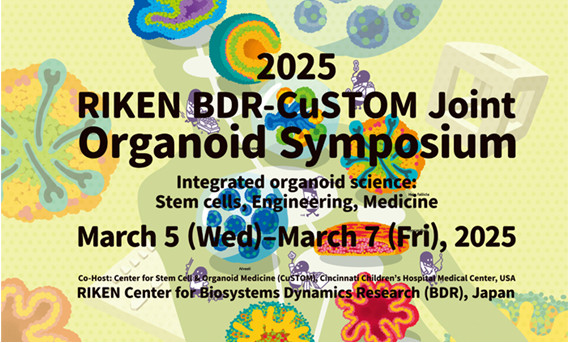
2025 RIKEN BDR-CuSTOM Joint Organoid Symposium: Calling for participants presenters!

We are pleased to announce that the 2025 RIKEN BDR-CuSTOM Joint Organoid Symposium "Integrated organoid science: Stem cells, Engineering, Medicine" will be held on March 5 to 7, 2025 at RIKEN Center for Biosystems Dynamics Research, Kobe, Japan.

Please visit the website for details:
https://www2.bdr.riken.jp/joint-organoid/2025/

We would also like to make know to you that the RIKEN BDR Symposium 2025 "Towards Redesigning Life Cycles" will be held right before this symposia on March 3 to 5 at the same venue. If you are interested, please schedule to join both events.
URL: https://www2.bdr.riken.jp/sympo/2025/

We look forward to welcoming you to our Center in March 2025.

URL:https://www2.bdr.riken.jp/joint-organoid/2025/
Date:March 5 (Wednesday) ? 7 (Friday), 2025
Venue:Kobe Campus, RIKEN Center for Biosystems Dynamics Research
Registration fee: FREE (Banquet and lunch fee required separately)
Deadline:
- Abstract submission for oral presentations
== Sunday, December 15, 2024 (Japan time)
- Abstract submission for poster presentations
- General registration
== Friday, January 31, 2025 (Japan time)
Confirmed Speakers:https://www2.bdr.riken.jp/joint-organoid/2025/speakers-e.html
Contact:RIKEN BDR Symposium 2025 Secretariat
E-mail: bdrcustom2025@ml.riken.jp
2024.07.10

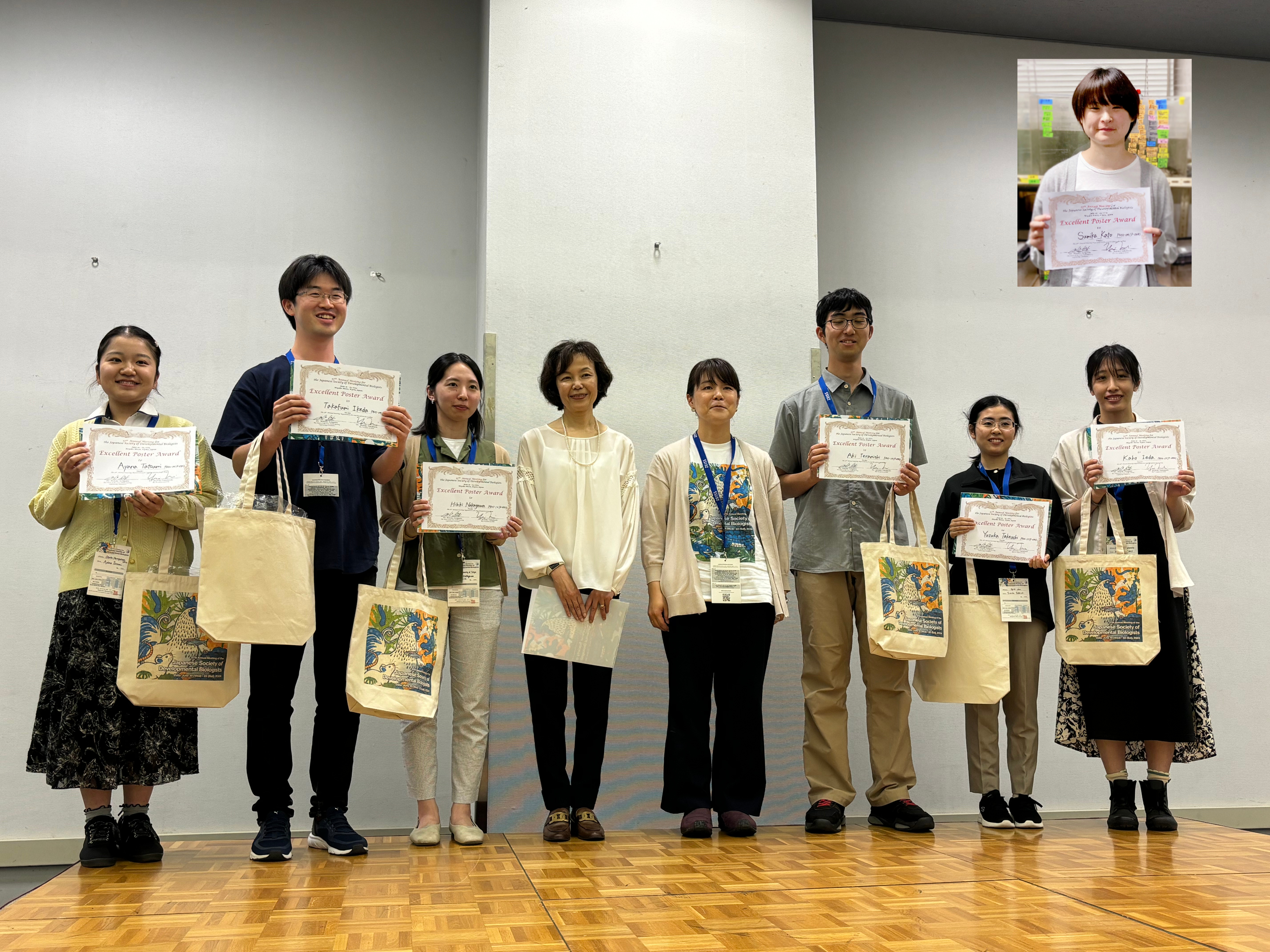
57th Annual Meeting of JSDB Poster Awards

57th Annual Meeting of JSDB Poster Awards
PB01-04(P-016): Takafumi Ikeda(Institute for Protein Dynamics, Kyoto Sangyo Univ.)
Visualization and manipulation of Nodal and Dand5 proteins secreted from the left-right organizer in zebrafish embryo


PB01-10(P-048): Aki Teranishi(Kanazawa Univ.)
Elastoplastic transition in epithelial folding controlled by actin bracket formation as a basis for the unidirectionality of morphogenesis


PB01-12(P-050): Hibiki Nakagawa(Dept. of Basic Sci., Grad. Sch. of Arts and Sci, The Univ. of Tokyo)
Effects of low-oxygen concentration on differentiation and morphogenetic movements in Dictyostelium discoideum


PB02-04(P-068): Sumika Kato(Dept. Biol. Sci., Grad. Sch. Sci., Univ. Tokyo)
Estimation of differentiation trajectories in Xenopus tadpole tail regeneration and functional analysis of c1qtnf3 that contribute to tail regeneration


PB02-10(P-083): Yuzuka Takeuchi(Graduate School of Biostudies, Kyoto Univ.)
Surrounding Environment Impact on The Cell Cycle Length in Early Cortical Development


PB02-14(P-091): Ayana Tatsumi(Grad. Sch. of Sci., Depart. of Bio., OMU)
Impact of epigenetic modifications downstream of TGF-β signaling underlying nested expression pattern of 5' Hox genes


PB02-17(P-094): Kaho Ieda(Nagoya City Univ.)
Identifying genes regulating developmental speed in C. elegans
2024.07.08

About DGDs new X account

Dear All,

Thank you for your continuous support for DGD.

As you may have noticed, DGD's "X" account has been suspended for several months for unknown reasons. Since there was no response to our request to un-suspend the account, the new account was created.
Please follow the new account below.

New account:@2024dgd62921
https://x.com/2024dgd62921

Thank you in advance for your understanding.

Sincerely,
--
Naoto Ueno, Editor-in-Chief
Development Growth & Differentiation
2024.02.20

Japanese Society of Developmental Biologists announces commendations for young research scientists

Aim: The Japanese Society of Developmental Biologists will commend young researchers who are pioneering the future of developmental biology through innovative research.

Award Name: JSDB Frontiers Prize

Eligibility: Members of the Japanese Society of Developmental Biologists
Application Procedure: Members who wish to be considered for the prize should submit the following documents (in English or Japanese) by email to jsdbadmin@jsdb.jp.

JSDB Frontiers Prize Candidate Curriculum Vitae (Word file)

• Describe the background and history that led to the innovative research, the key points of the research, and prospects (free format)
• Curriculum vitae, previous research experience, and achievements (complete form).
• Although not mandatory, it is recommended to submit one or more letters of support (representative stories from colleagues, collaborators, supervisors, etc., highlighting the applicant's innovation). *All unpublished data will be treated as confidential.

Evaluation Method: The selection committee will pre-screen candidates for online interviews through written evaluations of submitted documents. The 11-member committee, including JSDB board members, will seek to ensure diversity in gender, age, and affiliation.
The members of the first committee are: Kiyokazu Agata (Board member,National Institute for Basic Biology), Takeshi Onuma (Kagoshima University), Makoto Kashima (Toho University), Ryuki Shimada (Kumamoto University), Takayuki Suzuki (Osaka Metropolitan University), Sayaka Sekine (Tohoku University), Yoshiko Takahashi (President, Kyoto University), Mikiko Tanaka (Tokyo Institute of Technology), Akira Nakamura (Board member, Kumamoto University), Masahiko Hibi (Nagoya University), Toshihiko Fujimori (Board member, National Institute for Basic Biology).
Awardees will be invited to serve as committee members the next year, with half of the committee members rotating every year. Each committee will nominate members for the following year, to be decided by the JSDB board meeting. Mentors and other stakeholders for specific candidates will recuse themselves from evaluation.

Evaluation Criteria: Each individual is eligible to receive the award only once; a maximum of three awards will be granted each year.

Award Lecture: Awardees will present in English during a designated session at the JSDB annual meeting. Awardees are required to participate and present in the award lecture session. Awardees can also present in regular sessions during the annual meeting; active registration for general presentations is encouraged.

Award: Certificate
Prize and Invitation: Awardees will receive support for travel expenses to participate and present at international conferences, including the Joint Developmental Biology Conference held by developmental biology organizations in other countries (within three years of the award, up to a maximum of ¥300,000). Awardees will also be invited by the Editor-in-chief of Development, Growth & Differentiation, the international journal published by the Japanese Society of Developmental Biologists, to submit articles about their research and prospects in developmental biology.


The application schedule for the 1st JSDB Frontiers Prize is as follows:
Application: March 1–15, 2024 (Same as conference registration)
Document Review: April 1–30, 2024
Interviews: May 1–30, 2024
Awardee Decision and Announcement: June 1, 2024
Award Lecture: June 21, 2024 (Friday) 13:30–14:30
2023.08.08

DGD Awards 2023

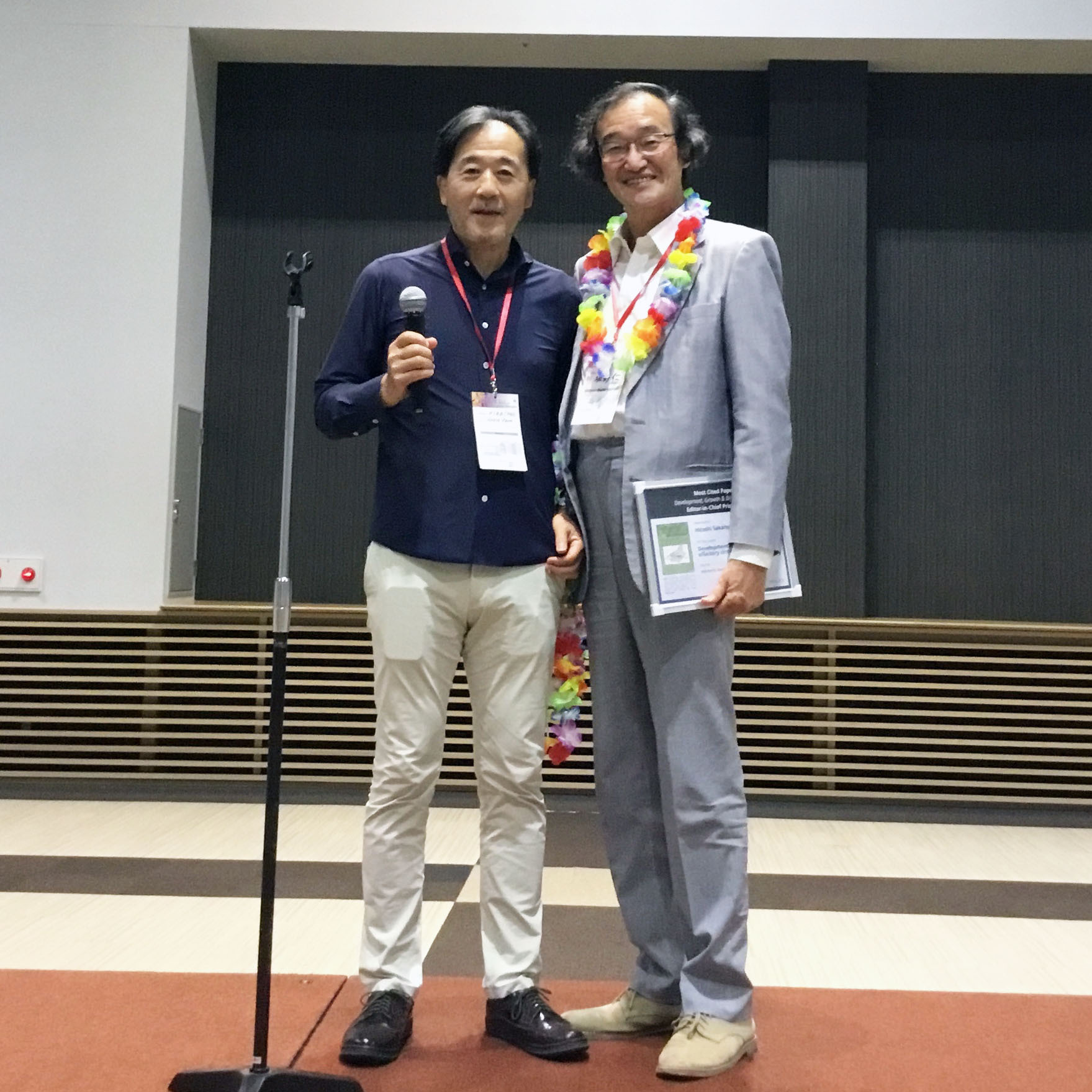
【Editor-in-Chief Prize(Most cited)】
Sakano, Hitoshi
Developmental regulation of olfactory circuit formation in mice
DGD 62 (4), 199-213, 2020

Total citation: 9
【Editor-in-Chief Prize(Most cited)】
Huanquan Lu, Siyuan Chen, ZhijianYou, Chuping Xie, Shichuan Huang and Xiarong Hu
PFKFB4 negatively regulated the expression of histone acetyltransferase GCN5 to mediate the tumorigenesis of thyroid cancer
DGD 62 (2), 129-138, 2020

Total citation: 9
【Wiley Prize (Most downloaded)】
Nuria P. Torres-Aguila, Marika Salonna, Stefan Hoppler, David E. K. Ferrier
Evolutionary diversification of the canonical Wnt signaling effector TCF/LEF in chordates
DGD 64 (3), 120-137, 2022

Total full access: 1128
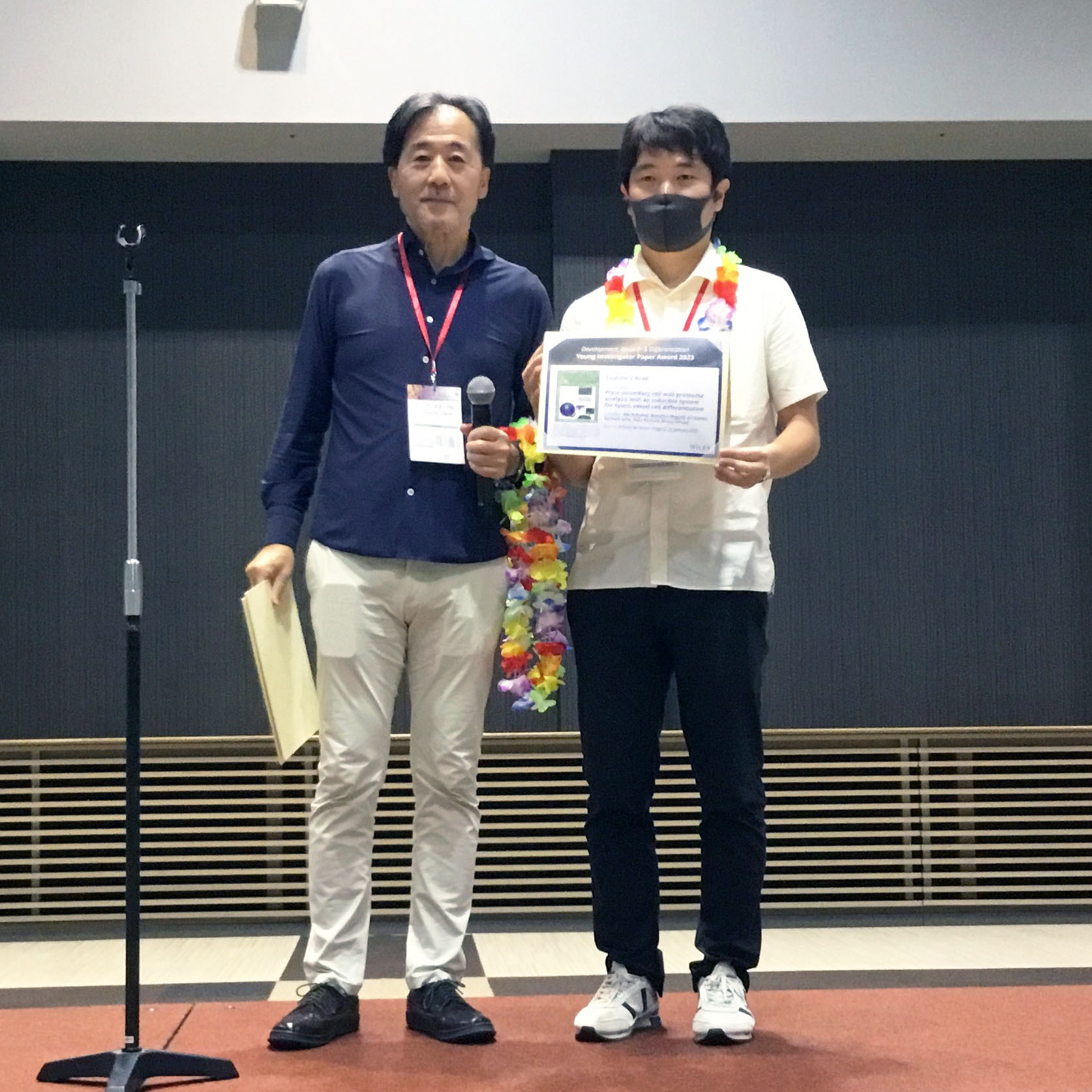
【Young Investigator Paper Award】
Toshihiro Arae, Mai Nakakoji, Masahiro Noguchi, Eri Kamon, Ryosuke Sano, Taku Demura and Misato Ohtani
Plant secondary cell wall proteome analysis with an inducible system for xylem vessel cell differentiation
DGD 64 (1), 5-15, 2022
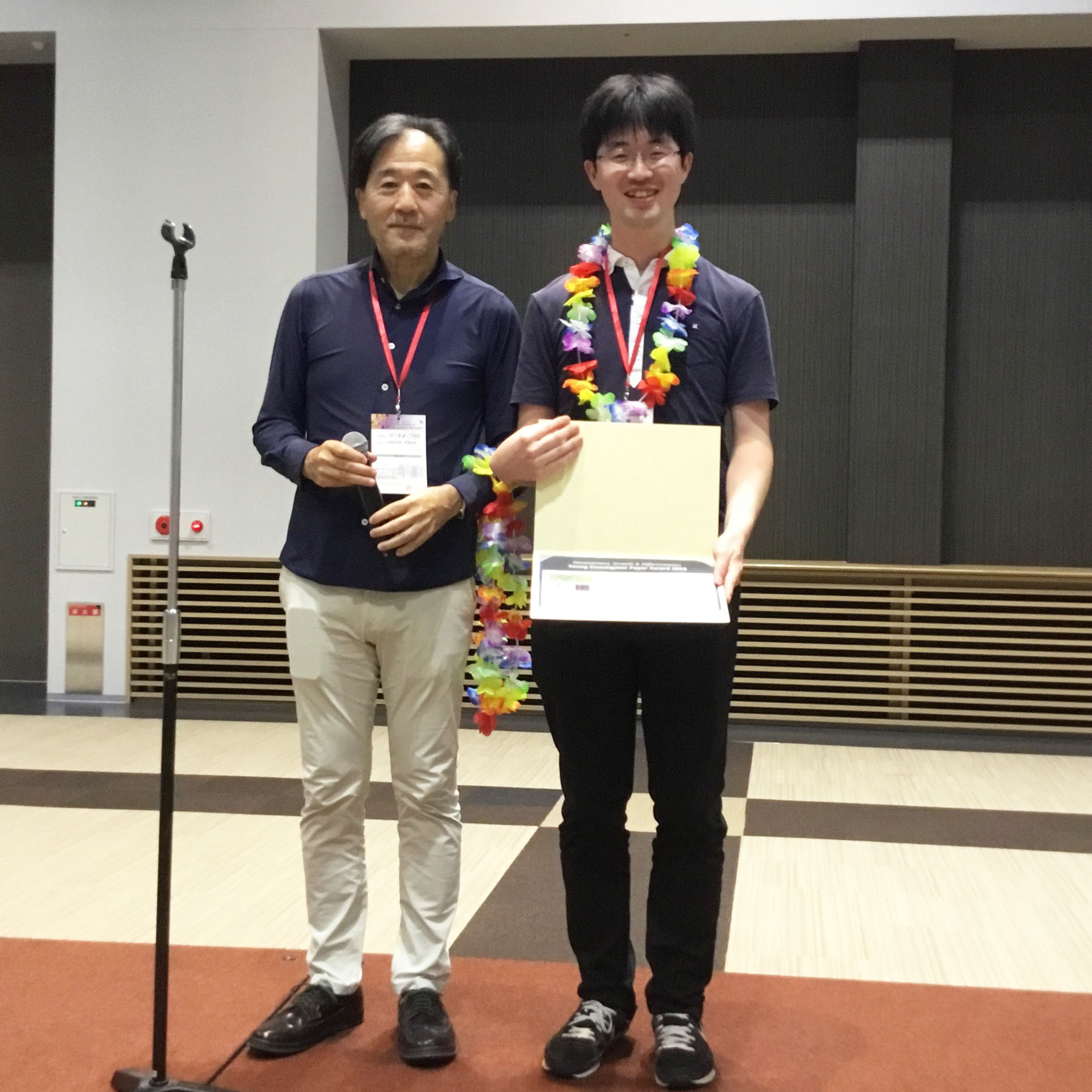
【Young Investigator Paper Award】
Munkhsoyol Erkhembaatar, Iroha Yamamoto, Fuduki Inoguchi, Kosuke Taki, Satoru Yamagishi, Leanne Delaney, Nishibe Mariko, Takaya Abe, Hiroshi Kiyonari, Carina Hanashima, Hayato Naka-Kaneda, Dai Ihara and Yu Katsuyama
Involvement of strawberry notch homologue 1 in neurite outgrowth of cortical neurons
DGD 64 (7), 379-394, 2022
【Young Investigator Paper Award】
Takafumi Ikeda, Kiichi Inamori, Toru Kawanishi and Hiroyuki Takeda
Reemployment of Kupffer’s vesicle cells into axial and paraxial mesoderm via transdifferentiation
DGD 64 (3), 163-177, 2022