2023.08.08
56th Annual Meeting of JSDB Oral Awards and Poster Awards
56th Annual Meeting of JSDB Oral Award
|
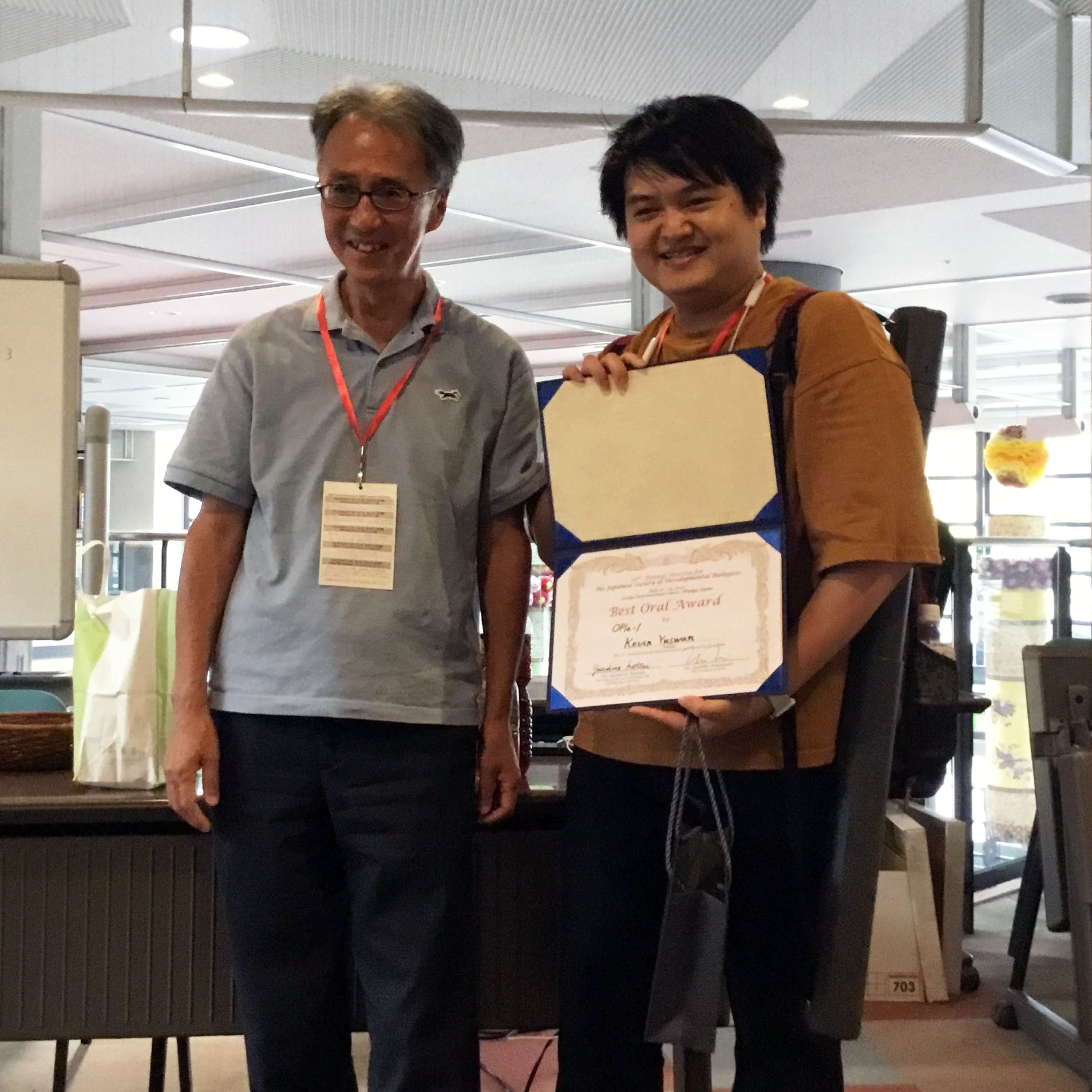
【Best Prize】
OP01e-1(A)(P083): Kevin Yuswan (Lab. of Histogenetic Dynamics, Grad. Sch. of Life Sci., Tohoku Univ.)
ECM dynamics modulate endocytosis and EGFR signaling to regulate the abdominal epithelium remodeling in Drosophila
|
|
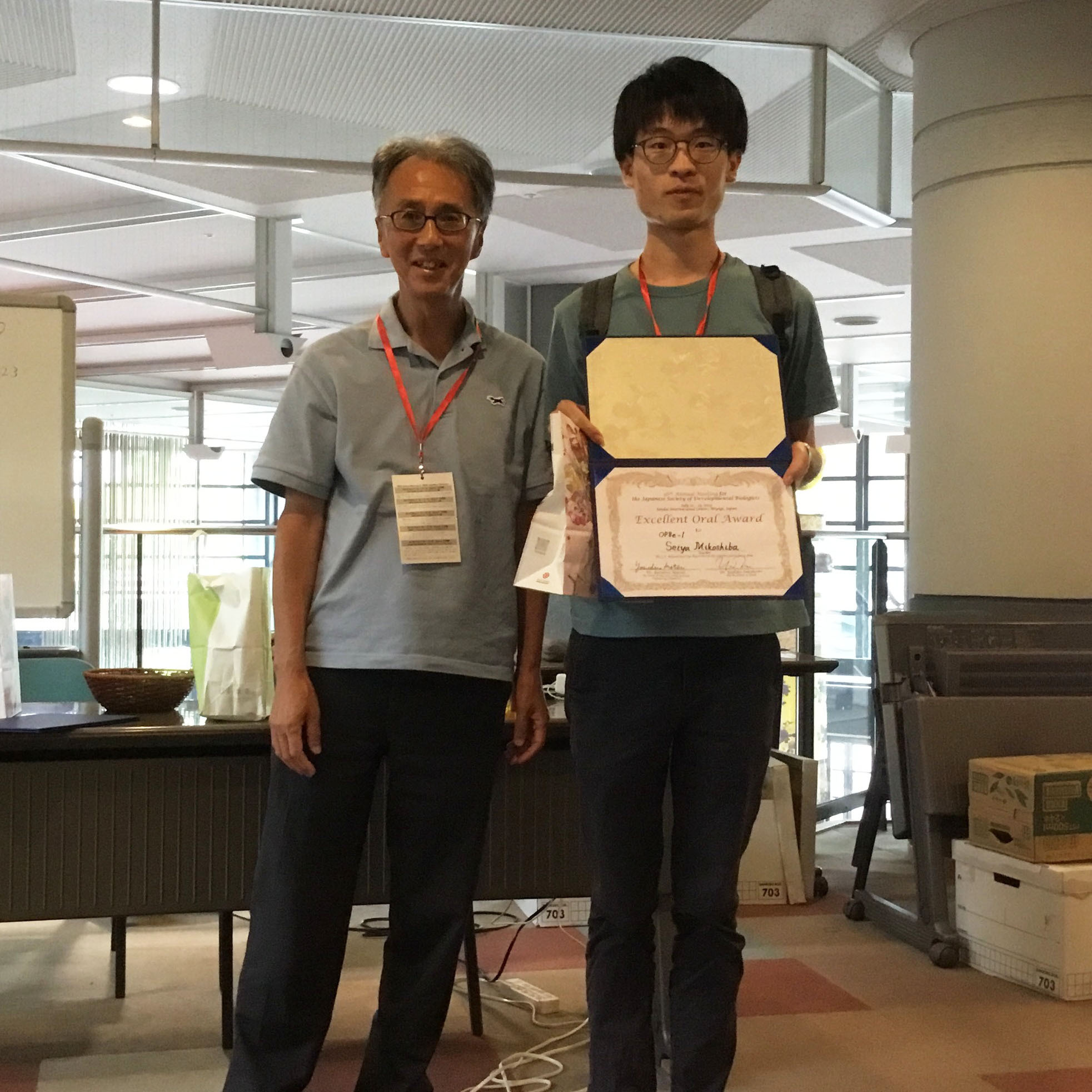
【Excellent Prize】
OP08e-1(A)(P028): Seiya Mikoshiba (Division of Embryology, NIBB)
In utero analysis of embryonic morphology and anterior-posterior axis formation in mice
|
|
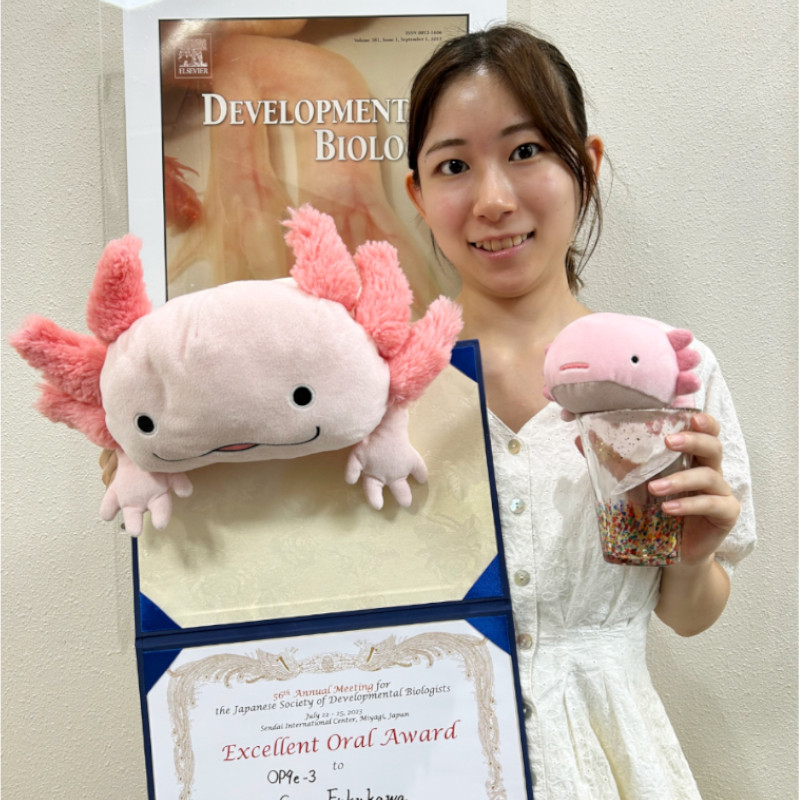
【Excellent Prize】
OP09e-3(A)(P123): Saya Furukawa (Graduate School of Environmental, Life, Natural Science and Technology, Okayama University)
Size-dependent dynamics of Shh/Fgf8 expression domains and cell distribution in axolotl limb regeneration: A comparative analysis across varying blastema sizes.
|
56th Annual Meeting of JSDB Poster Award
|
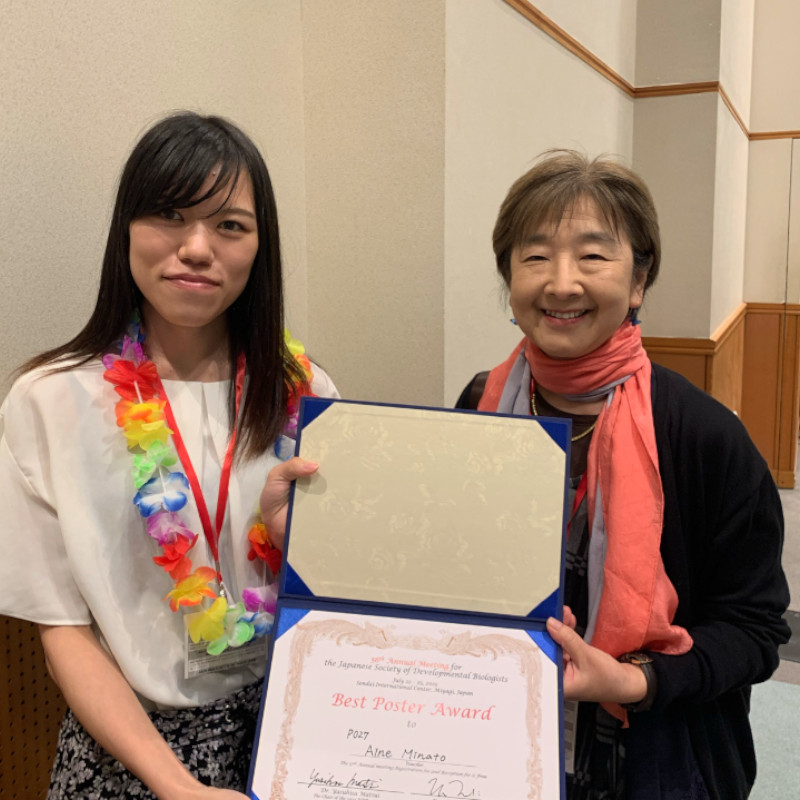
【Best Prize】
P027#(OP11j-6): Aine Minato (Research Institute for Microbial Diseases, Osaka University)
The novel embryonic clock system organized by chrono-hormone
|
|
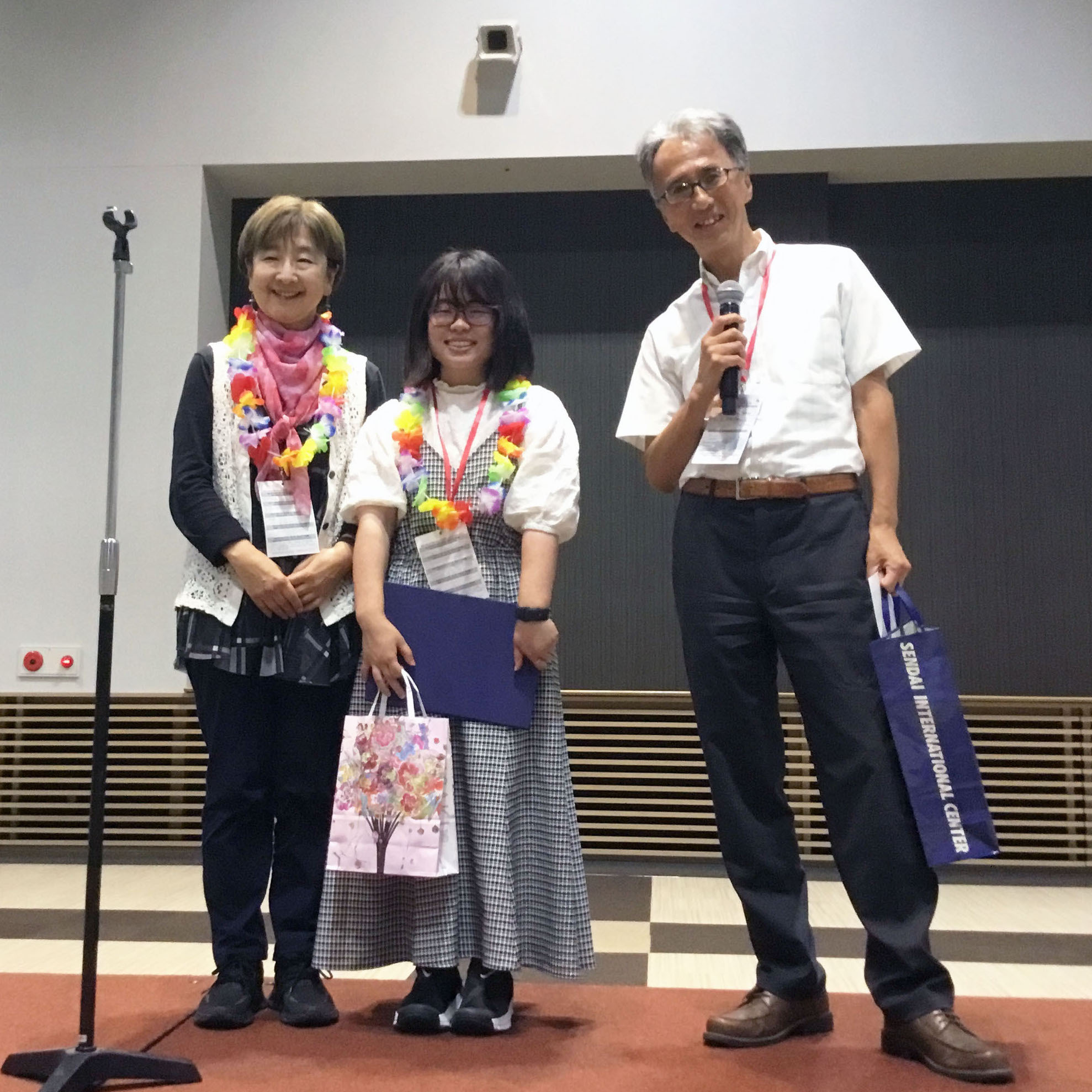
【Excellent Prize】
P117#(OP2j-9): Mai Takehara (Grad. Sch. of Integrated Science for Life, Hiroshima Univ.)
Investigation of regulating factors for testicular regeneration in newts.
|
|
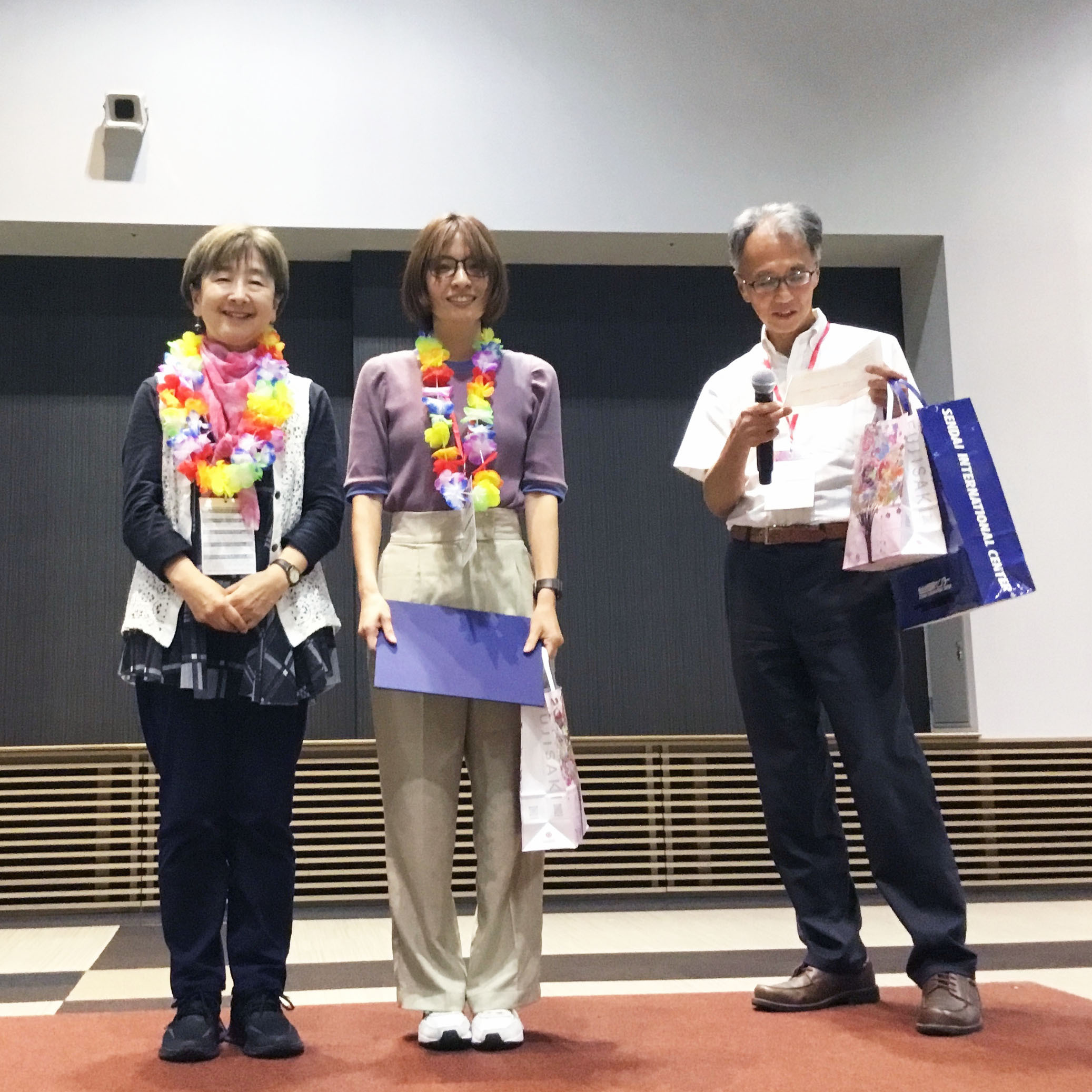
【Excellent Prize】
P048#: Sonoko Mizuno (Graduate School of Biostudies, Kyoto University)
The role of Pri micropeptides in epithelial invagination
|
2022.08.03
Okada Tokindo Fund Report =Flore Castellan (Univ. of Tokyo)
Department of Biological Sciences,
Graduate School of Science,
The University of Tokyo
Postdoc researcher
Flore Castellan
FOCIS 2022 conference (San Francisco) Outcome report
The FOCIS (Federation of Clinical Immunology Societies) meeting focused on translational immunology with participants ranging from molecular biologist to clinicians. It was the perfect place for crossdisciplinary exchanges of ideas to apply our new developmental biology knowledge of maternal cells to their human medical implications and I am grateful to the JSDB in supporting my participation to this meeting.
At the conference, I presented by oral and poster presentations the findings of my recently completed doctoral studies. Our research focused on revealing the nature and roles of maternal cells in pups, and we observed a potential role of maternal cells to prevent adverse immune reactivity in the neonates. On the other hand, potential human clinical involvement of maternal chimerism have been indicated by the research led by Dr. Toshihiro Muraji on the incidence of maternal cells in the congenital disorder biliary atresia. Further translational research is needed to bridge this developmental biology knowledge of maternal cells and their clinical consequences.
At FOCIS, my presentations caught the interest of both medical doctors and scientists lead of medical database repositories, curious of the detectability of maternal cells in publicly available single cells datasets, opening the door to potential interdisciplinary collaborations.
In terms of career development, I had the opportunity to meet professors looking for postdoctoral fellows, and received an offer to join NYU Langone Health where I will be working from next January.
Finally, attending the pre-meeting courses and targeted workshops was very valuable for learning more about the proper methods and pipelines to analyze the immunophenotyping data I collected. In particular, the tools I was introduced to to combine CyTOF data from different batches were directly applied to the data in the paper we will be submitting to an international journal this month.

Photo 1: Poster presentation.
|
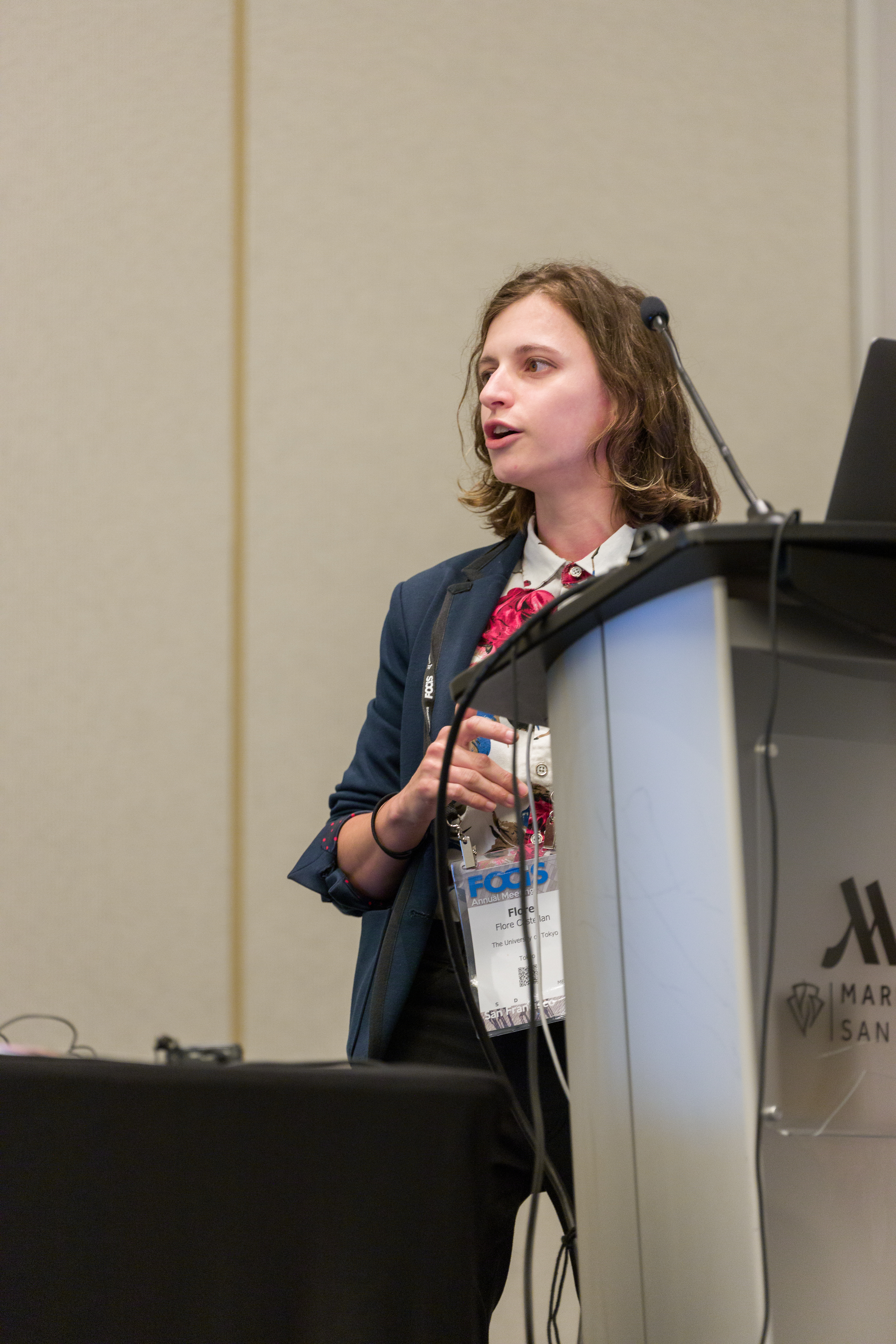
Photo 2: Oral presentation.
|
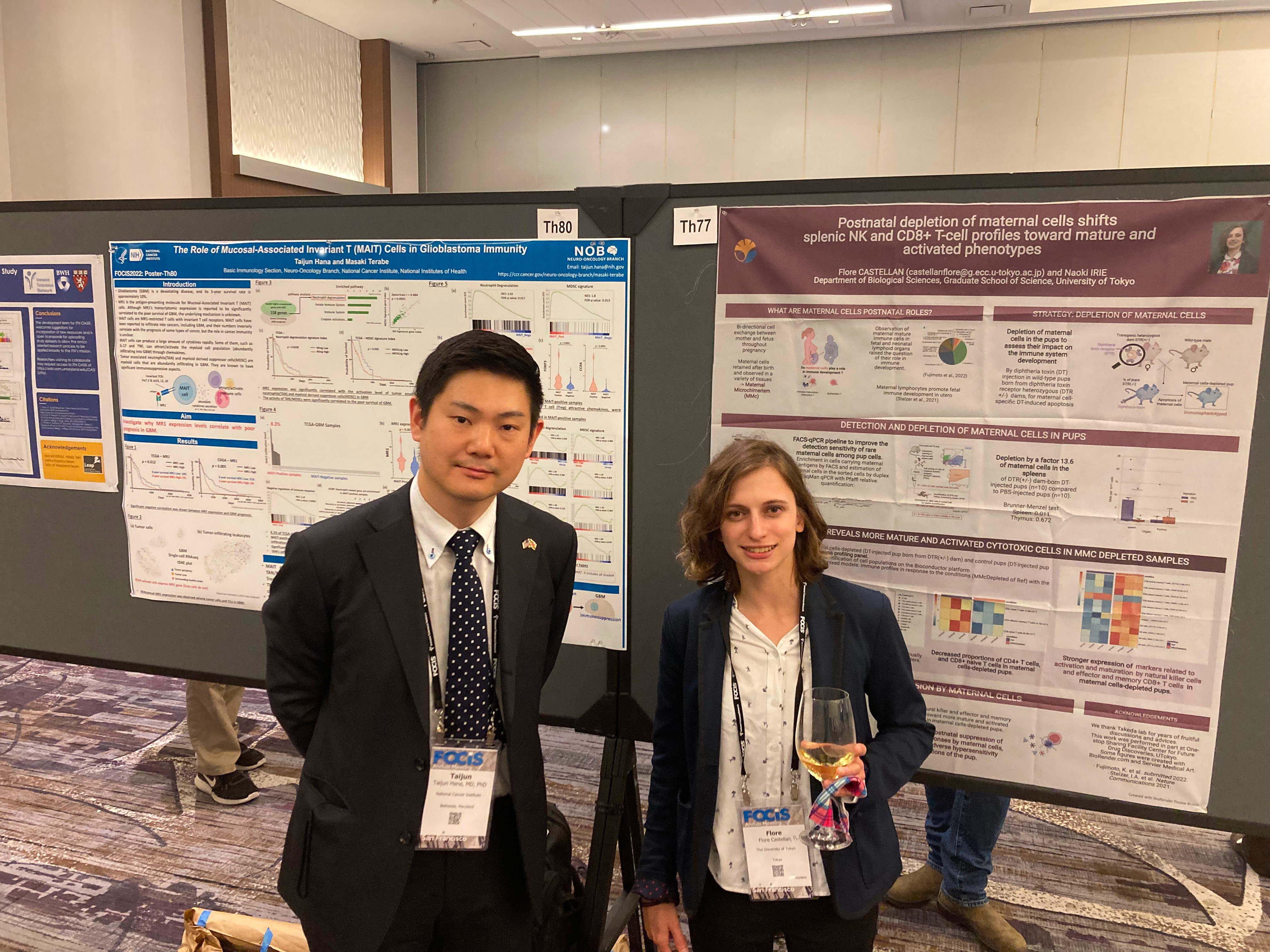
Photo 3: Poster presentation sideby- side another UTokyo alumni.
|
2021.11.26
Memorial Dr. Masukichi Okada
JSDB is sorry to hear that Dr. Masukichi Okada, Emeritus Prof of Tsukuba University, passed away on 23rd October, 2021. He made greatest contributions to the field of developmental biology in his research on the mechanism of Drosophila germ cell development, raising many excellent disciples as well as serving as the JSDB President (1995 - 1998). JSDB offers the deepest sympathy.
Hiroyuki Takeda, JSDB President
2019.06.04
The 52nd annual meeting of the JSDB by Li Zhuojie
Li Zhuojie
(Tongji University)
I were very honored to participate in the 52nd JSDB which was held in Osaka on May 14th.
I listened to the wonderful speeches of every teacher and student, not only learned a wealth of academic knowledge, broadened my horizons, but also let me know the gaps and deficiencies in my research work.
Under the careful arrangement of the organizers of the conference, we not only listened carefully to the wonderful speeches of the reporters. At the same time, we also presented our research progress in the form of posters, and conducted in-depth exchanges and discussions. Through various forms of sharing and communication, I have learned the cutting-edge progress in this field of research and the future direction. Many scientific researchers has provided their new scientific ideas and experimental methods, opening a new door for my future research work.
Finally, I would like to appreciate JSDB for providing us with a good chance and providing fellowship for me.
2019.05.31
52nd Annual Meeting of JSDB Co-sponsored by APDBN Poster Awards
P-053: Seiji Saito (Grad. School of Sci., Nagoya Univ.)
Identification and functional analysis of Gdf11 enhancer that determines the hindlimb position.
後肢の位置を決定するGdf11のエンハンサーの同定と機能的解析
P-023: Ryuki Shimada (NIG)
Exploring the murine germ cell masculinization mechanism using scRNA-Seq data
scRNA-Seqを利用したマウス生殖細胞オス化機構の研究
P-070: Hiroki Katsuta (Nagoya Univ. Grad. Sch. Med. Dept. Dev. Cell Biol., Div. Embryology, NIBB)
In vivo calcium signaling induced by mechanosensitive channel Piezo1 during lymphatic valve morphogenesis
リンパ管弁形成過程における機械受容チャネルPiezo1由来のin vivoカルシウムシグナルの役割
2019.05.30
The 52nd annual meeting of the JSDB by Ding Xiang
Ding Xiang
(SLST, Tongji Univ, IIV, Shanghai Tenth Hosp)
The 52nd Japan Society for Developmental Biology was held in Osaka, Japan on May 13, 2019. It was my fortunate to have participated in the conference and presented the posters. And it is my honor to accept the fellowship provided by 52nd Annual meeting for JSDB. Thank you for the JSDB fellowship program.
The organization was carefully organized and arranged to make you feel the atmosphere and enthusiasm of the international conference. I listened to the wonderful speeches of every teacher and classmate. I not only learned a wealth of academic knowledge, but also broadened my horizons. I learned more about my colleagues in the same direction, learned about other laboratory research methods and methods, and defined my own. Some advantages and disadvantages learned from each other enhance the level of my own scientific research.
The Japanese Society for Developmental Biology has specially invited editors and reviewers from journals related to developmental biology to explain the techniques for writing and submitting papers. The abstract of science and technology is the essence. It should be brief and logical, and concisely introduce the main content of this article. The preface mainly states the background of the research field and explains its central idea or importance. The various aspects of the research area have been specifically addressed, paving the way for known information. Point out the necessity of further research, give the author's research objectives, or outline the research content or research findings. And pay attention to three points. First, what is the research result of this paper, and what does the research result mean? Second, who needs to understand the results of these studies? Third, why do these readers need to understand your research results? (These results contribute to the ongoing research work in this area). During the meeting, everyone also discussed and exchanged the problems and precautions in the submission process. I have gained a deep understanding of the entire paper writing and submission process, and benefited a

2019.05.19
The 52nd annual meeting of the JSDB by Tzu-Chuen Lin
Tzu-Chuen, Lin
(Dept. of Anat. & Cell Biol., NTU, Taipei, Taiwan)
52th annual meeting of Japanese Society of Developmental Biology (JSDB) is scheduled to hold in Osaka International House through May 14-17, 2019. The place it held was very kindly for scholars to have chances to choose other living places in Osaka, because it is close to two stations, Osaka Metro Tanimachi Line Shitennoji-mae Yuhigaoka station and Kintetsu Railway Osaka Uehommachi station. JSDB cooperates with Asia-Pacific Developmental Biology Network (APDBN), so there are many Asia-Pacific Areas experts, scholars, or students in this area of developmental biology participating in the meeting. Apart from Asia, lots of scholars from all around the world such as the united states, Canada, and Europe also have academic publications.
I am now a graduate student from graduate institute of anatomy and cell biology, National Taiwan University. This time, I took part in the poster presentation. The topic of my poster is about the expression patterns of neuronal intermediate filament α-internexin in the developing pineal gland of Hoplobatrachus rugulosus. The result of our study showed that photoreceptor marker, recoverin and XAP1, could be observed in the development of both retina and pineal gland of frog. The expression of recoverin decreased slightly following the developmental pineal gland, while the expression of XAP1 increased a little from our observations. Whereas, the α-internexin-like protein, ina.S and nif.S, could be detected only in few photoreceptor-like cells at the early stage pineal gland. In conclusion, we suggested that XAP1 is a good marker for studying the photoreceptor cells in the developing pineal gland of frog.
This May, I participated in the 52th annual symposium held by JSDB in Osaka and it is quite different from other meetings I have joined in Taiwan. It is also my first time to go abroad to take part in an international meeting. It really means to me. Through this event, I learned a lot from many outstanding scholars who work hard in various developmental fields all over the world and this widened my views. Finally, I really appreciate that JSDB can keep using APDBN as the platform continuously invited scholars from related fields in Taiwan or even worldwide to participate in the annual meeting in Japan. It will make a significant contribution to the long-term development of academic exchange between Taiwan and Japan.

2018.07.19
The 51th annual meeting of the Japan Developmental Biology Society by CHEN-MING HAO
This year's Japanese Society of Developmental Biology, JSDB) is scheduled to hold its 51th Annual Conference and Asia Pacific Development in Funabori, Edogawa Ward, Tokyo from June 5th to 8th (Figure 1&2). Meeting place located at the center of community activities, it is very close to the Toei Shinjuku Line Funabori station, and it is convenient for scholars from other places. Japanese Developmental Biology Society cooperates with Asia-Pacific Developmental Biology Academic Network Conference, Many Asia-Pacific Areas experts, scholars, or graduate students in the area of developmental biology are happy to participate in the study. Apart from Taiwan, a lot of countries such as the united states, Australia, South Korea and Singapore also have academic publications.
For me, Chen-Ming, Hao, as a graduate student from National Taiwan University, I took part in the poster session (Figure 3&4). The subject of my poster is about the the expression pattern of neuronal intermediate filamentα-internexin in the chicken developing pineal gland. The results demonstrated that the expression of chkINA was detected in early stage of pineal gland and decreased following the development of pineal gland. We found that some chkINA immunopositive photoreceptor-like cells were also Visinin immunopositive. chkINA and Visinin co-exist in photoreceptor-like cells was demonstrated in the chicken pineal gland by confocal images. We conclude that chkINA could be a useful photoreceptor-like cells marker to be applied for the study of chicken pineal gland.
This year, I participated in the 51th Annual Symposium held by the Japan Developmental Biology Society and felt that the integration of academia and the international community invited scholars from all over the world are outstanding in the field of developmental biology. This shows the degree of academic internationalization in Japan. From this event, I believe that through this opportunity for students to attend international academic seminars, they can learn to study in many different fields about scholars' attitudes and intentions for academic research. Finally thanks to the Japan Society for Developmental Biology and can continue to use Asia Pacific Developmental Biology Network as the platform continuously invited scholars from related fields in Taiwan to participate in the organization in Japan. It will make a significant contribution to the long-term development of academic exchange between Taiwan and Japan.
This year's Japanese Society of Developmental Biology, JSDB) is scheduled to hold its 51th Annual Conference and Asia Pacific Development in Funabori, Edogawa Ward, Tokyo from June 5th to 8th (Figure 1&2). Meeting place located at the center of community activities, it is very close to the Toei Shinjuku Line Funabori station, and it is convenient for scholars from other places. Japanese Developmental Biology Society cooperates with Asia-Pacific Developmental Biology Academic Network Conference, Many Asia-Pacific Areas experts, scholars, or graduate students in the area of developmental biology are happy to participate in the study. Apart from Taiwan, a lot of countries such as the united states, Australia, South Korea and Singapore also have academic publications.
For me, Chen-Ming, Hao, as a graduate student from National Taiwan University, I took part in the poster session (Figure 3&4). The subject of my poster is about the the expression pattern of neuronal intermediate filamentα-internexin in the chicken developing pineal gland. The results demonstrated that the expression of chkINA was detected in early stage of pineal gland and decreased following the development of pineal gland. We found that some chkINA immunopositive photoreceptor-like cells were also Visinin immunopositive. chkINA and Visinin co-exist in photoreceptor-like cells was demonstrated in the chicken pineal gland by confocal images. We conclude that chkINA could be a useful photoreceptor-like cells marker to be applied for the study of chicken pineal gland.
This year, I participated in the 51th Annual Symposium held by the Japan Developmental Biology Society and felt that the integration of academia and the international community invited scholars from all over the world are outstanding in the field of developmental biology. This shows the degree of academic internationalization in Japan. From this event, I believe that through this opportunity for students to attend international academic seminars, they can learn to study in many different fields about scholars' attitudes and intentions for academic research. Finally thanks to the Japan Society for Developmental Biology and can continue to use Asia Pacific Developmental Biology Network as the platform continuously invited scholars from related fields in Taiwan to participate in the organization in Japan. It will make a significant contribution to the long-term development of academic exchange between Taiwan and Japan.